
Facelift vs. Fillers: Which is the Best Choice for a Youthful Appearance?

Are you looking for a solution to combat the signs of aging such as wrinkles, fine lines, and sagging skin? Two popular cosmetic procedures are facelifts and fillers.

How do you decide which option is right for you? We’ll compare and contrast facelifts vs. fillers to help you make an informed decision.

Facelift: The Ultimate Solution for Deep Wrinkles and Sagging Skin

A facelift procedure is a surgery that combines surgical and non-invasive techniques to give you that snatched, supple face you had when you were young. Facelifts were the third most popular cosmetic procedure in 2020, according to the American Society of Plastic Surgeons. A facelift often combines a variety of different techniques and procedures into one. To get the perfect youthful skin you once had, you will have to have a consultation to figure out the perfect facelift surgery for you.

Facelift Benefits:
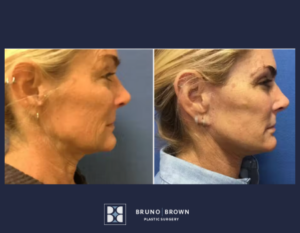
Facelift results can make you appear 12 years younger! Here are just some of the benefits:Before and after Facelift
  • Targets lose or sagging skin
  • Erases fold lines
  • Gets rid of fat that has fallen
  • Chisels your jawline
  • Can help with double chins

Facelift Risks:
Like every surgical procedure, facelifts can cause complications. This is why we recommend board-certified plastic surgeons. Facelift risks include but are not limited to:

  • Hematoma
  • Scarring
  • Facial hair loss
  • Skin loss
  • Nerve injury

Before you proceed, all risks should be covered in your consultation with your surgeon.

Fillers: The Non-Surgical Solution for Mild to Moderate Signs of Aging

Fillers are the non-invasive alternative to the surgical facelift procedure. Fillers are small injections to create smoother skin and a fuller appearance.

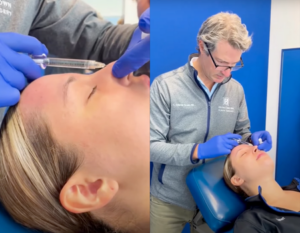
Benefits of Fillers:Dr. Bruno giving facial fillers
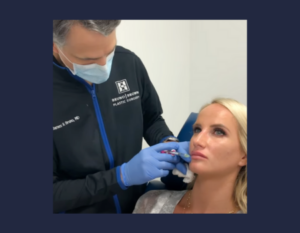
Fillers have a smooth and youthful effect on your skin. Some of the benefits of dermal fillers include:

  • Fuller wrinkles
  • Smooth lines on the skin
  • Restore volume to your face

Risks of Fillers:
Filler injections can have risks that you need to consider; some of these include:

  • Asymmetry
  • Eruption of acne
  • Bruising, scarring, wounds
  • Infection
  • Lumps
  • Skin irritation

Factors to Consider When Choosing Between Facelifts vs. Fillers

Both facelifts and fillers are effective ways to get that gorgeous youthful skin back to its prime. There are several factors to consider when deciding between a facelift and fillers, including:

  • A facelift will last longer than fillers. Face fillers are injections, similar to Botox; you will have to continue to go back to the doctor to continue to maintain that look.
  • Facelift is a surgical procedure. A facelift takes about 3 to 5 hours with a recovery time of 2 to 3 weeks. While fillers take 20 to 30 minutes and there is no recovery time.
  • Face fillers do not target the elasticity of the skin. In a facelift, you get the added benefit of getting rid of excess fat and sagging skin, which fillers do not address.

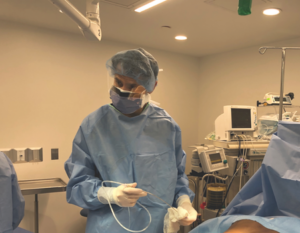
If you’re considering a facelift or fillers, schedule a consultation with a board-certified plastic surgeon to discover your best anti-aging solution today.

Enhance Your Natural Beauty with Top-Rated Northern Virginia Plastic Surgery Experts

If you’re seeking a trusted, experienced, and board-certified plastic surgery practice in Northern Virginia, look no further than Bruno|Brown Plastic Surgery. Our team provides a wide range of surgical and non-surgical cosmetic procedures to help you achieve your ultimate beauty goals.

Experience And Expertise: Northern Virginia Plastic Surgery

Bruno|Brown Plastic Surgery has the top plastic surgeons and an amazing team to provide you with everything you need for your cosmetic procedures.

Get To Know Our Northern Virginia Plastic Surgeons!The cover of the Washingtonian magazine with the top doctors 2022

Dr. Bruno graduated cum laude from Wilkes College and went on to attend Tufts University School of Dental Medicine. After attending both universities, Dr. Bruno decided it was time to get his medical degree from the University of Pennsylvania, later earning his certificate of training in Oral and Maxillofacial Surgery. Following this, he attended a two-year plastic surgery fellowship at the Cleveland Clinic Foundation. Dr. Bruno was recognized by the Consumers Research Council of America as one of America’s Top Plastic Surgeons and has been peer-voted as one of the Top Doctors by Washingtonian Magazine for breast reconstructive plastic surgery.

Dr. Brown graduated from the University of Virginia undergraduate before attending medical school at Tulane University. He then went on to complete five years of general surgery training at Texas Tech University, working his way up to Chief Resident before leaving to complete his straining in the plastic and reconstructive surgery program at the Cleveland Clinic Foundation. Dr. Brown has been featured in national and local publications such as the New York Times, Capitol File, DC Modern Luxury, Baltimore Magazine, What’s Up Annapolis, and the Washingtonian, where he was featured in articles as well as voted one of Washingtonian Magazine’s Top Doctors.

Personalized Treatment Plans For Your Northern Virginia Plastic Surgery Experience

Bruno|Brown Plastic Surgery prides itself on having a personalized experience. We rely on your input and one-on-one consultations to create a personalized and perfect plan for all your cosmetic needs.

We provide over 20 different cosmetic procedures that vary from surgical and non-surgical to skincare that will help you to achieve your cosmetic dreams.

Surgical:Performing DC thigh lift at northern virginia plastic surgery

  • Tummy Tuck
  • Mommy Makeover
  • Liposuction
  • Fat Grafting
  • Brazilian Butt Lift
  • Breast Augmentation
  • Breast Augmentation with Fat Grafting
  • Breast Lift
  • Breast Reduction
  • and MORE!

Non-Surgical:

  • PRP Injections
  • Botox Cosmetic
  • Dermal Fillers
  • Laser Skin Resurfacing
  • Kybella (Double-Chin Reduction)
  • and MORE!

Skin-Care:Botox with Nurse Charissa

  • Microneeding w/ PRP
  • Chemical Peels & Facials
  • Intense Pulsed Light Treatment (IPL)
  • Micro-Needling (w/ PRP)
  • HydraFacial
  • Skin Care Products
  • and MORE!

Advanced Techniques And Technology For Exceptional Northern Virginia Plastic Surgery Results

Bruno|Brown Plastic Surgery tries to stay above the curve, trying new techniques and technologies to give you the results you’ve always wanted.

Some recent examples are…

  • Botox for migraines
  • PRP Injections for hair loss and sports injuries
  • Provide all types of tummy tucks (mini, extended, circumferential)
  • Using skin grafting for breast augmentations

Looking for board-certified Northern Virginia plastic surgery? Book a consultation with us today!

HydraFacial Special Offer!

DC HydraFacial treatment in officeOFFER EXPIRED!

Glowing skin just in time for your holiday parties!

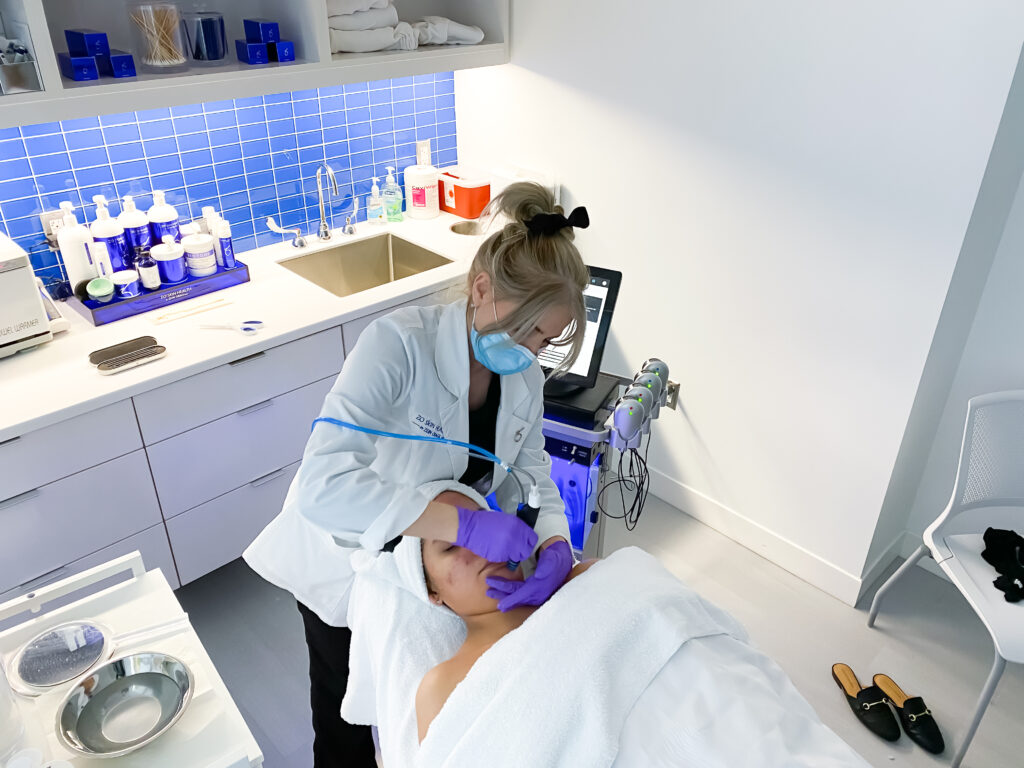
The ultimate HydraFacial experience! Begin with a gentle lymph detoxification to eliminate stagnant toxins from the face, stimulate blood flow, and reduce swelling and water retention.

Gentle, painless suction clears away dead cells and impurities while deeply infusing hydration, firming peptides, and essential antioxidants.

Finish off this 75-minute treatment with an enhancing LightStim LED Photodynamic therapy session.

The Platinum HydraFacial also makes a great gift 😉

1 Treatment: $199 (Typically $325!)
4 Treatments: $169 each (Typically $299 each!)

Book my appointment >


*This deal ends on December 31, 2023, and is valid on the Platinum HydraFacial. This offer can only be redeemed at our Chevy Chase location. Full payment is due at time of booking. Patients must schedule and attend their appointments by 6/30/24. Regular price of a Platinum HydraFacial is $325.


Say Goodbye to Hair Loss: See the Amazing Before and After Results of PRP Injections!

Hair loss is a common problem that affects many people, both men and women. While several treatments are available for hair loss (rosemary oil, scalp massages, etc.), PRP Injections have emerged as a safe and effective solution to help stimulate hair growth. We’ll look closely at PRP injections and show you some amazing before and after results.

What Are PRP Injections?

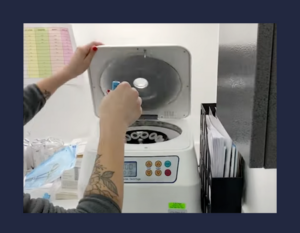
PRP injections are a form of regenerative medicine that harnesses the growth factors in your body to heal tissues. “Platelet-Rich Plasma,” or PRP, is the liquid component of your blood, composed mostly of water and proteins, as well as platelets, a vital blood cell type that contributes to healing in various parts of the body. To extract platelet-rich plasma, you will have your blood drawn (typically from your arm) and put into a centrifuge ( a machine that will separate your PRP from your blood).PRP Injections process

PRP injections are used in a variety of different ways for hair loss, muscle support, under-eye rejuvenation, micro-needling, and skincare treatments. PRP injections for hair loss use your own PRP to target and accelerate the hair growth process.

How Do PRP Injections Work For Hair Loss?

PRP injections are an effective way to combat hair loss. By injecting platelet-rich plasma directly into the targeted area, PRP therapy stimulates hair growth and prevents further hair loss. For those suffering from hair loss, there are three main ways PRP injections can help your hair loss:

  1. Preventing hair loss
  2. Promoting new hair growth
  3. Aid in stimulating new hair growth after hair transplants

Why Choose PRP Injections To Combat Hair Loss?

There are thousands of different solutions for hair loss, but most don’t work, involve a steroid, and/or have unexpected side effects.

Here are just some of the most significant advantages of using PRP injections for hair loss:

  • They are considered a safe hair loss treatment
  • Several studies have shown PRP can be effective for treatment of hair loss
  • There is no steroid involved

These are just three of the most common pros to treating your hair loss with PRP injections. If you are considering PRP injections, sit down with your doctor and discuss all options and pros of PRP injections.

Before And After Results Of PRP For Hair Loss

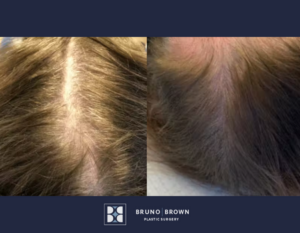
You can read all the pros and cons of PRP for hair loss, but the results speak for themselves. Check out more of our before and after results of PRP for hair loss in our gallery.

Before and After PRP for Hair Loss

Do you think PRP for hair loss is for you? Book a consultation today!

Achieve Your Dream Nose with a Non-Surgical Nose Job in DC

Are you unhappy with the shape of your nose but hesitant to undergo invasive surgery? A non-surgical nose job, also known as “liquid rhinoplasty,” might be the solution you’ve been searching for to achieve your the desired nose shape. In this comprehensive guide, we’ll explore everything you need to know about this minimally invasive procedure.

What Is A Non-Surgical Nose Job?

A non-surgical nose job is a minimally invasive procedure that targets the reshaping of your nose. Using dermal filler injections to correct a bump or angle of your nose.

Check out Dr. Brown performing a non-surgical nose job!

What Can A Non-Surgical Nose Job Correct?

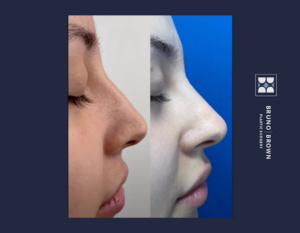
A non-surgical nose job can correct a variety of issues, including:Non-Surgical Nose Job before and after

  • Correcting bumps or indentations on the bridge of the nose
  • Lifting the tip of the nose
  • Smoothing out irregularities on the nose
  • Straightening the appearance of the nose
  • Increasing the height or projection of the nose

If you broke your nose playing basketball in middle school and you’ve always wanted to see what it would be like to have a different nose shape, but you aren’t quite ready for a surgical rhinoplasty, the non-surgical nose job is for you!

How Long Do The Results Last?

Results vary but usually last but somewhere between 6 to 12 months. Think of it like Botox for your nose; if you want to keep up that appearance without surgery, you will have to continue to get injections.

Before getting a non-surgical nose job, have a consultation with your doctor to ask how long your nose job will last.

What Are The Risks And Side Effects?Dr. Brown performing a Non-Surgical Nose Job

You should expect to have some bruising and swelling for the 2 to 4 days after your injections.

In terms of risks and side effects, some common side effects are:

  • Increased redness and swelling
  • Blurred vision
  • Infection

Even though there are risks, as long as you have a professional and experienced doctor, the risks are lower.

Is A Non-Surgical Nose Job Right For You?

A non-surgical nose job may be a good option if you’re looking for a quick and easy way to enhance the appearance of your nose without surgery. However, it’s important to consult with a qualified plastic surgeon to determine if this procedure is right for you.

At Bruno|Brown Plastic Surgery, our experienced and knowledgeable team can help you achieve the nose you desire. Contact us today to schedule a consultation and learn more about non-surgical nose jobs.

Say Hello to Your Dream Stomach: A Guide to the Different Types of Tummy Tucks and Recovery

Have you been struggling with a flabby belly despite your best efforts? Sometimes, even rigorous workouts and strict diets can’t fix certain areas of our bodies. Don’t worry because Bruno|Brown Plastic Surgery is here to help you achieve your dream stomach through tummy tuck surgery. We’ll guide you through the different types of tummy tucks and their recovery process.

Understanding the different types of tummy tucks

Before getting a tummy tuck, it’s important to know that there are four different types of tummy tucks. Each type caters to specific needs and concerns of the patient.

What are the four types of tummy tucks?

All four types of tummy tucks target the removal of loose skin and excess fat and help create a tightened stomach area after weight gain, weight loss, aging, or pregnancy.

  1. Mini tummy tuck:
    A mini tummy tuck is ideal for people who only have a small amount of excess skin and fat in the lower abdominal area. The incisions are smaller, and the surgery takes less time than the other types of tummy tucks.
  2. Regular/normal tummy tuck:
    The traditional tummy tuck targets the entire abdominal area from hip to hip. This type of tummy tuck is perfect for individuals who have excess skin and fat on their entire abdomen.
  3. Extended tummy tuck:
    An extended tummy tuck is similar to a regular tummy tuck, but it extends further back to the hips. It may also involve some liposuction to contour the area. This type of tummy tuck is recommended for those who have excess skin and fat in the lower back and hips.
  4. Circumferential tummy tuck:
    The circumferential tummy tuck is a 360-degree tummy tuck that removes excess skin and fat from the entire torso. It’s ideal for individuals who have lost a significant amount of weight and have excess skin and fat in their back, hips, and abdomen.

What is the tummy tuck recovery process like?

The recovery process of a tummy tuck varies depending on the type of tummy tuck you choose. However, there are some general guidelines that apply to all tummy tuck procedures.

Dr. Bruno highlights that a traditional tummy tuck takes about 6 weeks to be fully recovered. To break that down further, your recovery timeline would look something like this:

  • During the first 2 weeks, you should really be taking it easy. You are probably hunched over when you walk, with limited movement, really just being cautious and moving slowly.
  • In the 3rd and 4th weeks, you will be able to do some light activities. Still no heavy lifting or intense activity, but you should be able to have more mobility.
  • After 6 weeks, you should be fully recovered and able to resume your normal activities. You should be able to lift heavy objects and engage in strenuous exercise after this time.

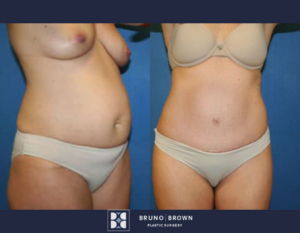
Choosing the right type of tummy tuck for you:Before and after tummy tuck

You should have a consultation to figure out which type of tummy tuck is right for you. In your consultation, you will discuss your problem areas, your concerns, and the best way to treat them. Then your surgeon will make a recommendation on which tummy tuck you should get in order to achieve the best result possible.

Interested in learning which type of tummy tuck is right for you? Call us at (301) 215-5955 to schedule a consultation today!

Your Ultimate Guide to Breast Augmentation Recovery: FAQs Answered by Dr. Brown

Breast augmentation is a popular cosmetic surgery that can help improve your confidence and enhance your figure. However, the recovery process can be overwhelming for many patients. In this article, Dr. Brown, a trusted Washington, DC plastic surgeon, answers some of the most common breast augmentation recovery FAQs.

Breast augmentation recovery FAQs, what you need to know:

1. How long is the recoveryprocess: breast augmentation recovery week by week:
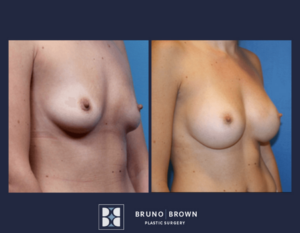
Breast augmentation before and after

The recovery process varies for each patient, but most patients can return to light activity within 2 weeks after surgery. Consult with your doctor to ensure you are free and clear before resuming your normal routine.

2. How long after breast augmentation can I work out?

Heavy exercise or chest exercise should be avoided for 3 to 4 weeks after surgery.

You should be able to do light lifting and light activity 2 to 3 weeks after your surgery. This means you should be able to return to your everyday workout routine about 3 to 4 weeks after your surgery. 

Make sure you discuss this with your doctor before starting back up with your workout routine.

3. Will I have breast implant scars?

Yes, breast implant scars are common because small incisions must be made to insert the implants. Most surgeons place the scars in inconspicuous areas to make them less visible.

4. When can I drive after my breast augmentation surgery?

Most patients are able to resume driving a few days after surgery, but it’s important to pay attention to any discomfort while sitting up and driving. As a rule of thumb, if it hurts, don’t do it or be extra careful.

5. When can I sleep on my side after breast augmentation?

According to Dr. Brown, you can sleep on your side a day or two after the surgery. However, if you are a person who sleeps flat on their stomach, you will have to wait at least 2 weeks (or more, depending on what your surgeon says).

Do you have more questions about breast augmentation recovery? Our team of Washington, DC plastic surgeons are here to help guide you through every step of the process. Call us at (301) 215-5955 and book a consultation today!

How Often Should You Get a Facial? Skincare Expert Reveals the Secret

Have you ever felt that post-facial glow and wished you could experience it every day? While daily facials may not be practical, knowing how often to get a facial can help maintain healthy and radiant skin.

So, how often should you get a facial?

According to skincare specialist Jennifer at Bruno|Brown Plastic Surgery, getting a facial every 6 to 8 weeks is ideal for a healthy, effective skincare regimen. This allows enough time for your pores to fill up with dirt and oil before your next facial, but not so much time that your skin becomes dull and clogged.

  • If you have acne-prone skin, you may want to get a facial every 4 to 6 weeks.
  • If you have dry skin, you may want to get a facial every 8 to 12 weeks.
  • If you have sensitive skin, you may only want to get a facial once a month.

Ultimately, how often you should get a facial is up to you and your skin. We recommend talking to a skincare expert like Jennifer to find out what’s right for you.

What does a facial do?

Facials can help to remove dirt, oil, and dead skin cells from your face. They can also help to shrink pores, reduce inflammation, and improve the overall texture of your skin.

If you have acne-prone skin, facials can help to unclog pores and reduce breakouts. If you have dry skin, facials can help to hydrate and plump your skin. If you have dull skin, facials can help to brighten and clarify your complexion.

There are many different types of facials and facial treatments. From medical-grade facials to HydraFacials to chemical peels, etc., are all considered types of facial treatments. Of course, not all facials are created equal. Some facials are more aggressive than others, and some may not be right for your skin type. It’s important to choose a facial that is appropriate for your needs and to work with a professional who can help you choose the right products and treatments for your skin.

The main goal of a facial, is to use a mix of exfoliation, massage, scrubs, oils, and steam to increase lymphatic drainage, blood circulation, and pore extraction and promote healthier, more clear skin.

Are facials good for your skin?

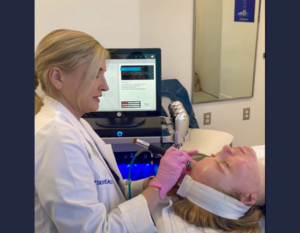
Skin care specialist preforming a HydraFacial

The short answer is, yes, absolutely, facials are good for your skin.

Facials are more than just a way to cleanse your face of dirt. They also deep-clean toxins and bacteria and remove dead skin cells from your face. This deep cleaning protects your skin from bacteria and helps prevent blackheads and skin inflammation.

Determining the best facial for your skin:

It is important to note that everyone’s skin is different. A skin product or facial that has a flawless effect on your sister might make your skin break out. This is why it is important to have a consultation skincare professional before your first facial.

In your skincare consultation, you will discuss:

  • What is your current skincare routine?
  • What are your current skin concerns?
  • Are you allergic to any products?
  • What product make you break out? Dry you out?
  • Do you have more dry or oily skin?
  • Are you prone to redness?

After you discuss these questions, your skin care professional will recommend the best skincare treatment or custom facial that will help you get the results you want.

Watch our skin care specialist, Jennifer, during a skincare consultation with a patient before deciding the best treatment for them.

Maintaining healthy skin between facials:

There are three main things you should be using on your skin every morning to keep your skin healthy and protected:

  1. Moisturizer
  2. Sunscreen
  3. Facial Cleanser

As long as you have all three of these products that work for your skin, you are protecting your skin.

Interested in learning more about how often you need a facial or have skincare questions? Book a consultation with us today!

Gynecomastia Surgery: A Comprehensive Guide to Male Breast Reduction

Understanding Gynecomastia

Gynecomastia is a medical condition that causes overdeveloped or enlarged male breasts that can occur at any age. It’s a common condition that affects approximately 40-60% of men at some point in their lives. Gynecomastia can occur due to hormonal imbalances, obesity, or certain medications.

While gynecomastia is not a serious medical condition, it can cause emotional distress and impact your quality of life. Many men feel self-conscious about their chest and may avoid certain activities, such as going to the beach or pool.

What is gynecomastia surgery?

Gynecomastia surgery, or male breast reduction surgery, is a plastic surgery procedure that reduces the appearance of breast tissue, flattens the chest region, improves the appearance of pectoral muscles, and increases self-confidence.

At Bruno|Brown Plastic Surgery, we use a combination of liposuction and glandular tissue removal to achieve optimal results.

How long does male breast reduction surgery take?

Surgery times can vary, but the surgery typically takes between 1 to 3 hours.

Do I have to stay at the hospital overnight?

No overnight hospital stay is required. Unless specifically recommended by your surgeon, you should be able to go home after your gynecomastia surgery.

Let’s talk about gynecomastia surgery recovery.

The recovery process should take about 1 to 2 weeks, but every recovery and every patient is unique.

To have a smooth recovery, make sure not to do any high-intensity physical activity until approved by your doctor. You will probably be sore, potentially have some mobility limitations in your arms, and have some bruising for the first few weeks. Make sure to take it easy and let your body heal. Most people can return to regular activity after a week; make sure you hold off on exercising until you’re fully healed.

All of this will be discussed with your doctor in your pre and post-surgery consultation. Make sure you come to your consultation with the questions you have about your gynecomastia surgery recovery. Some questions might be:

  • Where will I be taken after my surgery is complete?
  • What medication will I be given or prescribed after surgery?
  • Will I have dressings/bandages after surgery? When will they be removed?
  • Are stitches removed? When?
  • When can I resume normal activity and exercise?
  • When do I return for follow-up care?

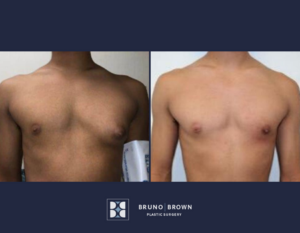
Gynecomastia: before and after surgery.

Here is an example of a gynecomastia surgery before and after from Bruno|Brown Plastic Surgery.

gynecomastia surgery before and after

You can view more gynecomastia before and after surgery photos on our gynecomastia procedure page.

Schedule your gynecomastia surgery consultation today. Contact us at (301) 215-5955 or schedule a consultation.

Most Frequently Asked Questions About Botox: DC Edition

What You Need to Know About Botox: DC Edition

Botox is a minimally invasive cosmetic procedure that uses Botulinum Toxin to smooth out the skin and help prevent wrinkles and lines on your face.

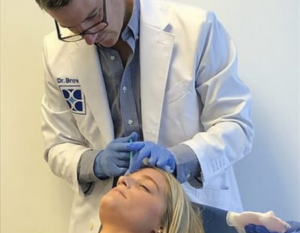
Want to see what a Botox procedure looks like? Watch our very own Dr. Brown perform Botox on a patient.

How does Botox work?

Injections of the botulinum toxin block the nerve signals to the muscle in which it is injected. Without a signal, the muscle is not able to contract. The end result is diminished unwanted facial wrinkles. In simpler terms, Botox is injected into your skin and helps prevent movement so that your face remains smoother.

What are the benefits of Botox in DC?

The benefits of Botox are many; here are just a few!Dr. Brown doing botox on a patient

  • A minimally invasive, quick procedure. Botox injections typically take about 5 to 15 minutes, depending on how much Botox you are having injected. The procedure is a small injection, which most patients say they don’t feel. This procedure doesn’t have any downtime afterward and will have extremely fast results.
  • Quick results. Within the first 3 days, you should start to see results from your Botox. By the end of the first week, you should see smoother skin.
  • Enhances your natural beauty. Botox helps bring back a smoother, more youthful appearance to help highlight and enhance your natural beauty!
  • Lasting Results. Botox can be a great investment, lasting up to 8 months for some patients!

Does Botox hurt?

The botox injection is like a small prick, and many patients say they don’t really feel the injection. One of Bruno|Brown Plastic Surgery’s DC Botox patients was asked this question, and they replied:

“BOTOX doesn’t hurt, I really didn’t feel it.”

Another Botox DC reviewer said:

“I’ve been getting Botox from Bruno|Brown Plastic Surgery for several years. I love that they ask me so many questions and really have me move my face/forehead before injecting. I’ve gone to places that clearly do the same thing for everyone, but I feel like it comes out perfectly every time here.”

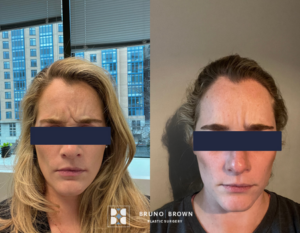
How often should you get Botox?Before and After Botox

This really depends on each person! On average, Botox results last about 4-6 months in certain areas; some people burn it off quicker. Most of our Washington, DC BOTOX patients return every 3-4 months. However, some people prefer to go often to keep their face as smooth as possible. If you are unsure, we recommend having a consultation with Dr. Bruno or Dr. Brown so that they can help you figure out how often you should be getting injections.

Interested in learning more about Botox in Washington DC? Click HERE to schedule a consultation at Bruno|Brown Plastic Surgery today!